How to Extend the Life of an Industrial Dust Collector Through Refurbishment
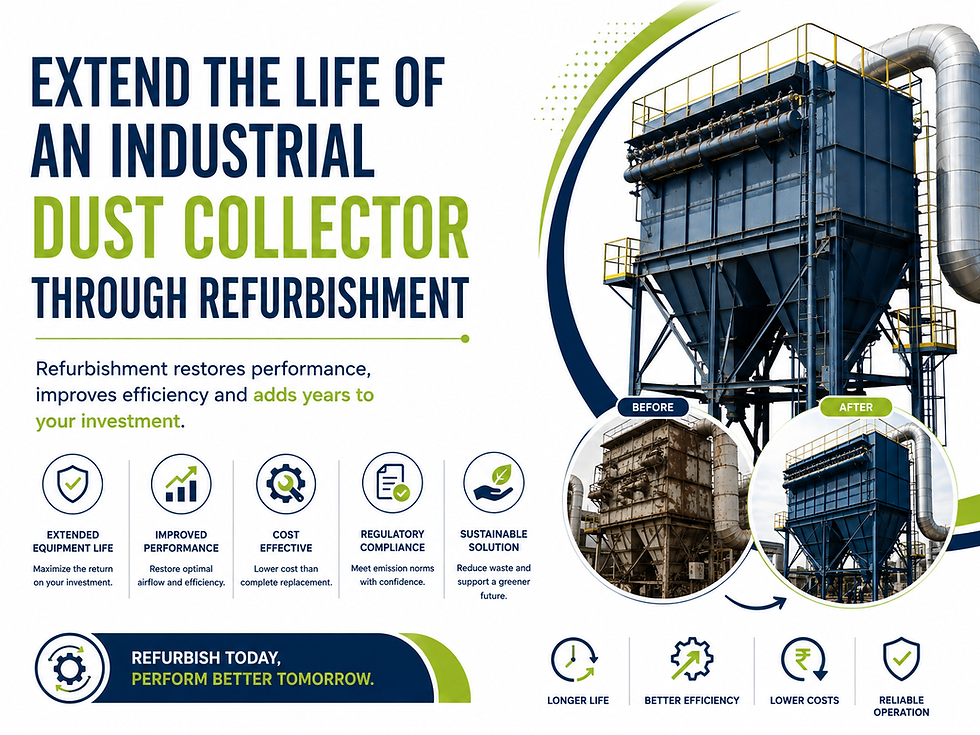
Industrial dust collectors operate continuously in demanding factory environments. Over time, dust buildup, worn filter media, damaged seals, and mechanical stress can reduce their performance. Refurbishing dust collectors provides a practical way to restore an aging system without immediately replacing the entire unit. It can improve filtration efficiency, reduce operating problems, and support cleaner workplace conditions while extending equipment life.
When an existing collector has a strong structural foundation, refurbishing of dust collectors can often be more cost-effective than installing new equipment. A professional dust collector refurbishment program identifies worn components, restores damaged parts, and upgrades critical systems. With proper inspection and maintenance, an older collector can continue delivering reliable dust extraction performance for many more years.
Why Refurbish an Industrial Dust Collector?
Industrial dust collectors are exposed to abrasive particles, high airflow, temperature changes, and continuous operation. These conditions can gradually affect filter bags, cartridges, fans, valves, duct connections, and collection chambers. Instead of replacing a complete system, refurbishment focuses on the components that actually require attention.
A well-planned industrial dust collector refurbishment can restore airflow, improve filtration, and reduce unexpected downtime. It also allows plant operators to upgrade outdated components according to current production requirements. Before starting work, technicians should inspect the complete system and identify the main causes of declining performance.
Key benefits include:
Lower capital cost compared with complete replacement
Improved filtration and airflow performance
Reduced unplanned maintenance and downtime
Longer equipment service life
Better reliability of critical components
Key Areas to Inspect During Refurbishment
Filter Media and Filtration Components
Filters are among the most important parts of a dust collection system. Damaged, clogged, or incorrectly fitted filter bags and cartridges can restrict airflow and increase pressure drop. During refurbishment, filter condition should be assessed carefully, with replacement considered when cleaning can no longer restore acceptable performance.
Fans, Valves, and Mechanical Parts
The fan, rotary valves, dampers, bearings, and other moving components should also be inspected. Excessive vibration, unusual noise, air leakage, or reduced airflow may indicate mechanical wear. Replacing worn components and balancing the fan can improve system efficiency and help prevent further equipment damage.
Improve Performance with System Upgrades
Refurbishment does not have to mean simply replacing old parts with identical components. Modern upgrades can make an existing dust collector more efficient and easier to maintain. Depending on the application, improvements may include upgraded filter media, pulse-jet cleaning components, improved sealing, pressure monitoring, and energy-efficient controls.
Professional dust collector refurbishing services can also evaluate connected ductwork and hoods. Poorly designed or leaking ductwork can reduce capture efficiency even when the collector itself is working correctly. Addressing these supporting components helps the entire dust extraction system perform more effectively.
Create a Preventive Maintenance Program
Refurbishment provides the best long-term results when followed by preventive maintenance. Operators should regularly monitor pressure drop, airflow, filter condition, fan performance, and unusual vibrations. Early detection of problems helps prevent minor defects from developing into expensive failures.
A practical maintenance routine should include:
Inspecting filters and seals at scheduled intervals.
Checking fans, bearings, valves, and motors for wear.
Monitoring differential pressure and airflow.
Cleaning or replacing components when required.
Recording maintenance findings for future inspections.
Conclusion
A properly maintained dust collector can deliver reliable performance long after its original installation. Dust collector refurbishment helps restore filtration efficiency, repair worn components, improve airflow, and extend equipment service life without requiring a complete replacement. Regular inspections and preventive maintenance make the investment even more valuable by reducing unexpected downtime and operating costs.
Most importantly, an efficient collection system helps reduce Industrial Air Pollution in Factories and supports a cleaner, safer production environment. If your dust collector is losing efficiency or showing signs of wear, consider professional refurbishment to restore performance and improve long-term reliability.
Comments