How to Plan a Dust Collection System for a New Manufacturing Plant
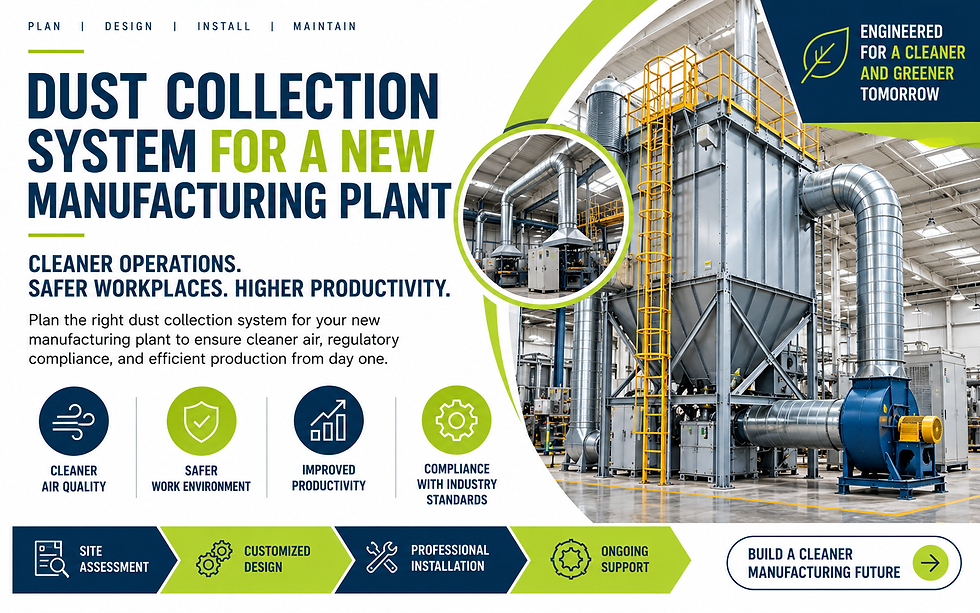
Planning a new manufacturing plant requires more than selecting machines and arranging production lines. A properly designed dust collection system is essential for maintaining cleaner air, protecting workers, and keeping equipment efficient. Choosing the right bag filter manufacturer India can help manufacturers develop a system suited to their process, dust load, and production requirements.
A reliable bag filter manufacturer India can assess the type of dust generated, required airflow, filtration efficiency, and available installation space before recommending a solution. Early planning also helps prevent costly modifications later and supports compliance with workplace and environmental requirements.
Understand Your Dust Collection Requirements
The first step is to identify where dust and fumes are generated. Different manufacturing processes produce different particle sizes, temperatures, moisture levels, and dust concentrations. For example, woodworking creates fine wood dust, while metal processing may generate heavier particles, sparks, and potentially combustible dust.
A detailed assessment of the production process helps determine the required air volume and filtration technology. Consider every dust-generating machine, the number of operating machines, production capacity, and whether the system will operate continuously or intermittently.
Key Factors to Evaluate
Before designing the system, document:
Type and characteristics of dust
Dust generation points
Required airflow and suction volume
Operating temperature
Moisture and chemical content
Available installation space
Future production expansion
Select the Right Filtration Technology
Once the dust characteristics are understood, select an appropriate dust filtration system. Baghouse systems are widely used in manufacturing because they can handle substantial dust loads and provide efficient particulate filtration when correctly designed and maintained.
Working with an experienced baghouse filter manufacturer India can help you determine the appropriate filter media, bag configuration, cleaning mechanism, hopper design, and discharge arrangement. Depending on the application, pulse-jet cleaning, reverse-air cleaning, or other filtration methods may be considered.
Plan Airflow and Ductwork Carefully
An efficient dust collector depends on more than the filter unit itself. Duct diameter, layout, bends, branch connections, and airflow velocity all influence system performance. Poorly designed ductwork can cause pressure losses, dust settling, uneven suction, and unnecessary energy consumption.
A professional industrial bag filter manufacturer can help calculate airflow requirements and optimize the ducting network. The design should provide adequate capture velocity at each extraction point while avoiding excessive pressure drop.
Consider Energy Efficiency and Maintenance
Energy consumption should be considered during the design stage. An oversized fan, excessive pressure drops, or poorly balanced duct system can increase operating costs. Variable frequency drives, efficient fans, appropriate filter sizing, and optimized airflow can help improve overall system efficiency.
The system should also be designed for convenient inspection and maintenance. Easy access to filter bags, hoppers, valves, fans, and control equipment reduces downtime and makes routine servicing more practical. Selecting an experienced bag filter system manufacturer can also support long-term system reliability.
Plan for Safety and Future Expansion
Safety should be included from the beginning, particularly when the plant handles combustible or hazardous dust. Depending on the material and process, the system may require suitable explosion protection, spark control, grounding, isolation, or other safety measures.
Future production plans should also be considered. If additional machines may be installed later, the ducting, fan capacity, electrical controls, and filtration equipment should allow reasonable expansion without requiring a complete redesign.
Choose an Experienced System Partner
A dust collection system is a long-term investment, so selecting the right supplier is important. Look for a manufacturer that can provide engineering support, system design, fabrication, installation guidance, commissioning, and after-sales service rather than simply supplying a filter unit.
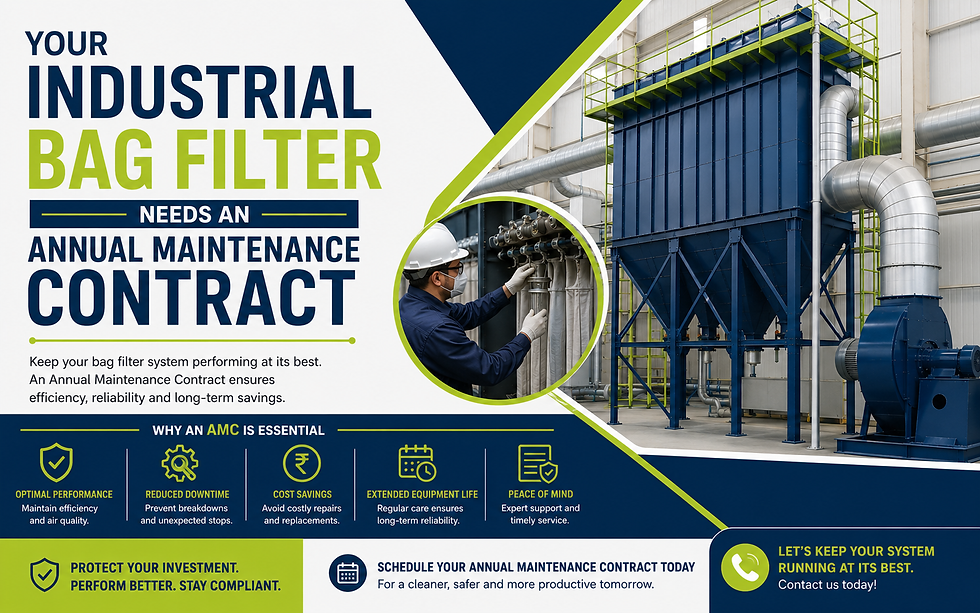
Regular inspection is equally important because filter condition, differential pressure, airflow, and cleaning performance can change over time. Bag filter systems need professional maintenance to maintain filtration efficiency, reduce unexpected downtime, and extend equipment life.
Conclusion
Planning a dust collection system before a new manufacturing plant begins operation can improve workplace conditions, equipment performance, energy efficiency, and long-term operating reliability. Start by understanding the dust characteristics, calculate airflow requirements, design efficient ductwork, select suitable filtration technology, and include safety and future expansion in the plan. Partnering with an experienced manufacturer can simplify the engineering and installation process while ensuring the system matches your production needs.
If you are planning a new industrial facility, consult a trusted bag filter manufacturer India for a customized dust collection solution designed around your process and plant requirements.
Comments