What Is a Metal Grinding Dust Collection System and How Does It Work?
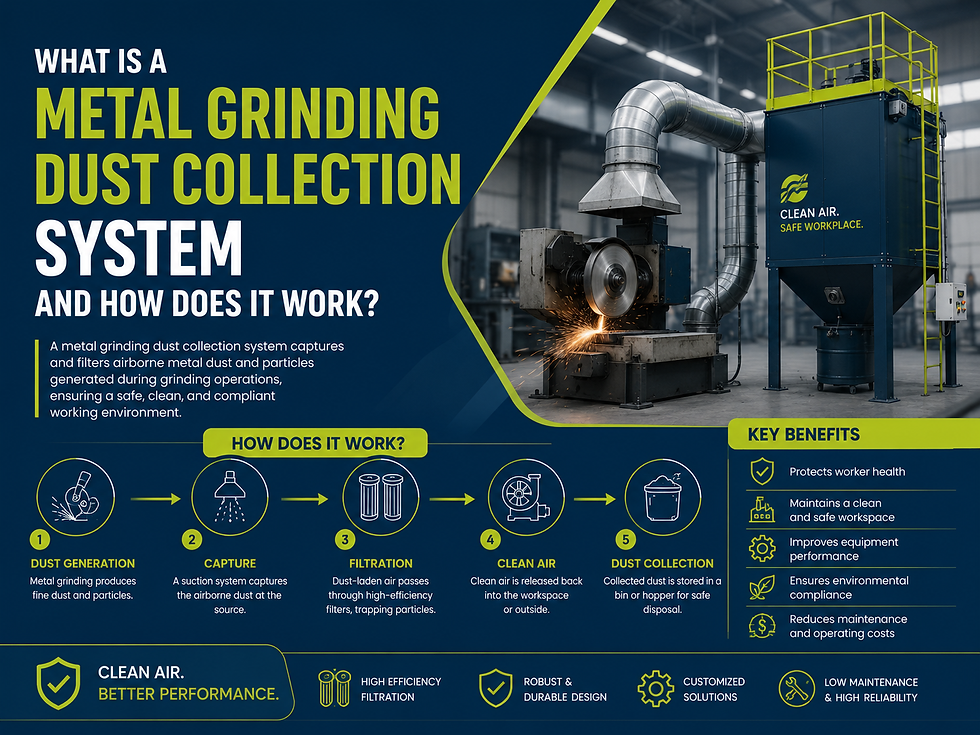
Manufacturing facilities and metal fabrication workshops make a lot of dust when they grind, cut, polish, and finish parts. In those areas, a metal grinding dust collection system gets put in place to grab these harmful particles before they drift around the workplace. With that in operation the goal is a cleaner, safer, and more productive day-to-day routine for the workers.
When metal dust ends up in the air, it can really trouble employee health, it can also harm machinery, and it can lead to higher maintenance costs. A dependable system for metal grinding dust collection keeps many industries aligned with workplace safety standards, and at the same time it supports smoother operations with less downtime and fewer interruptions.
Why Is Metal Grinding Dust Dangerous?
The aerosol particles generated by metal grinding activities might linger above the worksite for extended durations (sometimes until cleaned out). These suspended particles are liable to constitute aluminum, brass, iron, carbon as well as other metallic elements whose ingestion may cause toxic Egyptian and carcinogenic reactions.
Problems emphasized by the virtual reality disorder generated by the metal dust are:
Inhalation disorders experienced by the workers
Loss of visibility in the premises where one is expected to work
High risk of fires and explosions
Sensitive equipment e.g. electronic devices are destroyed.
More expenses due to higher level cleaning and maintenance
This danger can be minimized by an efficient grinding dust removal system which extracts the suspended particles every time with no break.
How Does a Metal Grinding Dust Collection System Work?
A dust collecting system runs a rather simple but useful routine, to grab metal fragments made during grinding activities. It’s basically a quick capture, move, then keep the particles contained, so the work area stays manageable.
1. Grabbing the dust at the place it appears
There are hoods, ducting, or even extraction arms placed near the grinding machines. They catch the dust right away while it’s still being produced, so it does not drift around the facility as easily.
2. Moving the dirty air along
A strong fan provides airflow that pulls the contaminated air through the duct network. The dust heavy air gets transported from the grinding point to the filtering unit, without much lingering.
3. Filtering and particle trapping
In the filtration chamber, specific filter media holds onto the metal particles, while cleaner air can go through. Better grade filters can even snare extremely fine dust grains.
4. Collecting what’s trapped and getting rid of it
The captured material ends up in hoppers, bins, or other collection containers, then it can be disposed of safely or sent for re-use. Because the flow is steady, the system keeps running with minimal interruption.
Key Components of a Dust Collection System
An up-to-date metal dust extraction system usually consist of:
Fan or industrial blower
Ductwork network
Capture hoods or extraction arms
Filter unit
Collection bins
A control panel along with the monitoring system
Each of these such components is of great importance to the system and this in achieving a high efficiency dust removal performance.
Benefits of Installing a Grinding Dust Collection System
Industries that invest in a high-quality dust collection solution experience several advantages.
Enhanced Employee Safety
Overhead pollutants help reduce the levels of risk faced by employees from being exposed to dangerous particles and provide conformity with occupational health standards.
Better performance of machines
Given that powders can accumulate, the same powder may cause faults in machine operation. Premises free of dust will increase the life of machinery and get rid of the extra cost for their repair.
Work done in a tidy environment
Increased employee efficiency and work better in the conducive environment with less dust, and the products are not only good but also take less time to produce. regarding the employee’s behaviors as the need to produce something occurs.
Meeting Standards
There are many standards in a specific industry that involves factories and workshops with machinery. Grinding dust collectors that are of the best quality is beneficial for the business purposes because it allows them to meet the standards.
Choosing the Right Dust Collection Solution
In the process of shopping for a metal dust collecting system, it is essential to take such aspects into consideration. That is, the volume of dust, size of particles, design of the area and strength of operations required should not be underestimated. Partnering up with a proficient dust collection equipment fabricator will guarantee that the system will be designed properly to operate at optimum capacity for a longer time.
Conclusion
A metal grinding dust collection system is an essential purchase for operations that do grinding plus metal finishing. When the dust gets captured at the source, and the contaminated air is filtered properly, and the particles are collected in a safe way, the results show up quickly. Worker safety improves, equipment is protected, and the whole operation feels more efficient. It also helps businesses solve poor air quality in factories while still staying in line with environmental duties, and workplace safety regulations.
Comments